A Quiet Strength Amidst the Storm
Chronic Care During Natural Disasters
Teresa Miller
10/31/20256 min read
Introduction:
The Invisible Burden
Let’s be honest. The thought of caring for a loved one with a chronic health condition is already demanding—a continuous marathon of medication schedules, appointments, and emotional support. Now, add a natural disaster—a sudden, unyielding force like a hurricane, wildfire, earthquake, or even a severe winter storm—and the pressure multiplies exponentially.
The reality is, many of us—whether you’re a Millennial, Gen X, or Gen Z individual—are stepping into caregiving roles, often unexpectedly and without the extensive training and traditional support systems. You might be juggling a career, a young family, and now, the profound responsibility of a parent's or relative’s well-being. This isn’t just about managing illness; it’s about safeguarding the most vulnerable during incredibly stressful times.
As someone who understands this tightrope walk, I’ve learned that preparedness, adaptability, and a healthy dose of compassion are absolutely essential.
This guide aims to equip you—the modern caregiver—with practical, verifiable strategies and insights to navigate the unique and amplified challenges of managing chronic health conditions during and after a natural disaster. We’ll focus on leveraging public domain resources, building personal and community resilience, prioritizing safety, and utilizing data available to the general public in the United States.
Understanding the Amplified Vulnerability
Natural disasters strip away routine, expose vulnerabilities, and severely limit access to critical infrastructure. For individuals with chronic conditions—such as diabetes, heart disease, respiratory issues, or mobility impairments—situations like power outages, flooding, disrupted transportation, and communication breakdowns create immediate and significant risks.
The intersection of chronic care and disaster involves several key risks:
Medication Integrity and Access: Loss of electricity means refrigeration for insulin or other temperature-sensitive medications is compromised. Roads may be impassable, preventing resupply.
Reliance on Medical Equipment: Conditions requiring oxygen, nebulizers, electric wheelchairs, or dialysis become life-threatening when power is lost.
Exacerbated Mental Health Concerns: Disasters trigger profound anxiety, stress, and fear, which can directly exacerbate physical conditions, from high blood pressure to irritable bowel syndrome.
Disrupted Care Networks: Primary care physicians, specialists, and home-health services may be unreachable or displaced, leaving the caregiver as the sole medical decision-maker.
To combat these risks, we must move beyond basic disaster kits and adopt a precision-focused care plan tailored to the individual's specific, chronic needs.
Phase I: Pre-Disaster Planning (Crucially Important!)
The single most effective tool in disaster caregiving is planning done before the threat materializes.
A. The Condition-Specific Emergency Kit
Your kit must be more than water and a flashlight; it must specifically address the chronic condition.
7-Day Medication Supply: Aim for a 5 to 7-day supply of all daily prescription medications. Crucially, obtain backup prescriptions in advance from your healthcare provider, stored electronically and in a waterproof bag.
Medical Information Card: Create a readily accessible, laminated card for both the caregiver and the person receiving care. Detail:
Full list of medical conditions and allergies.
Medications (name, dosage, frequency).
Physician and Pharmacy contact information.
Durable Medical Equipment (DME) information (e.g., model number, power requirements).
Insurance information and a signed HIPAA authorization (in case you need to communicate with healthcare providers on their behalf).
Power Solutions for DME: For devices relying on electricity (e.g., oxygen concentrators, specialized beds), identify and acquire portable battery backups, power banks, or manual alternatives. This is non-negotiable.
Specialized Supplies: Include items like wound care materials, diabetic testing supplies, non-refrigerated nutritional supplements, or catheters.
B. Evacuation, Shelter, and Transportation Logistics
Transportation and sheltering become immensely complex with mobility issues or specialized medical needs.
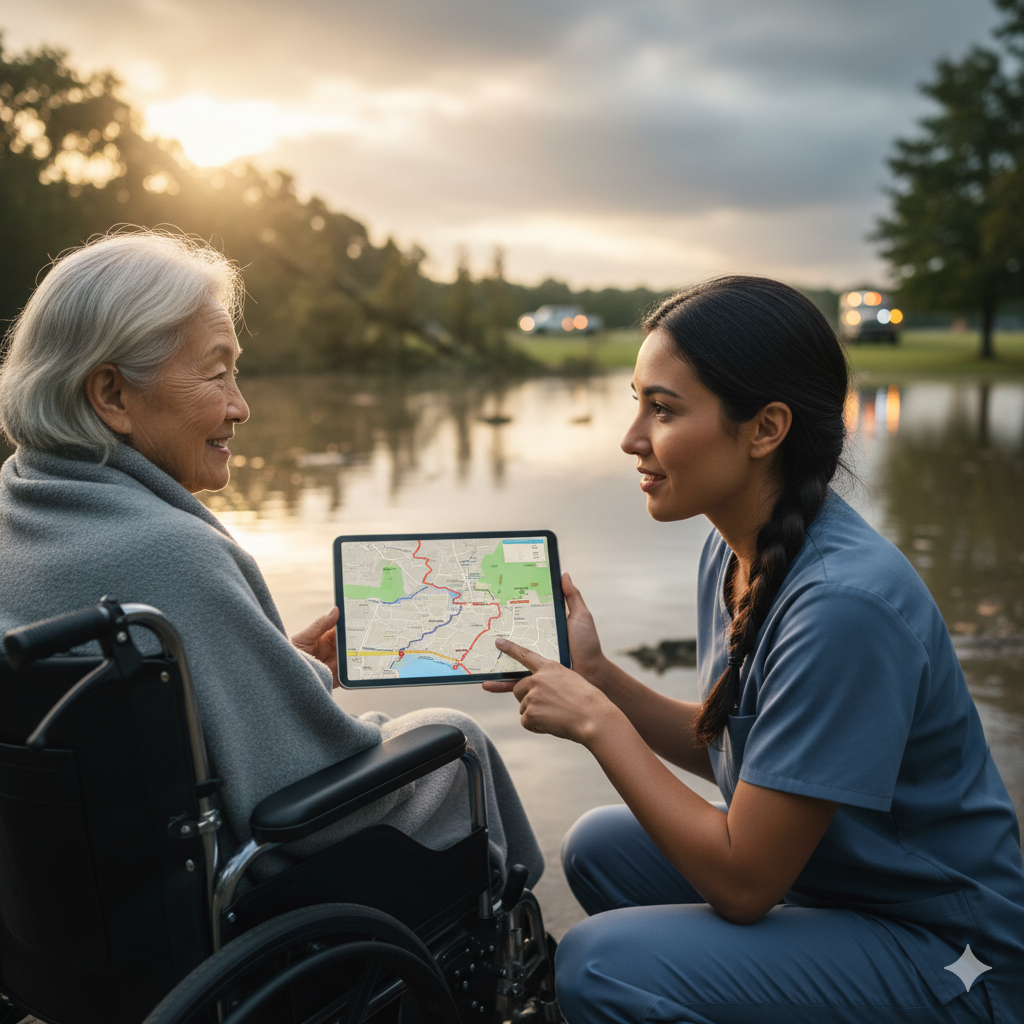
Evacuation Route and Destination: Do not assume standard public shelters can accommodate complex medical needs. Identify special needs shelters run by local government or non-profit organizations before a disaster is imminent.
Source: Find your local Emergency Management Agency by searching your state's official website.
Transportation Plan: Standard public transport may not accommodate wheelchairs or specialized equipment. Have a written agreement with a family member, neighbor, or medical transport service for evacuation.
C. Secure Your Digital Lifeline: Cybersecurity Awareness
In a crisis, reliable information and communication are lifelines. Cybersecurity awareness is paramount to prevent distress and exploitation.
Official Sources Only: Rely exclusively on official government and verified non-profit websites for disaster updates and aid applications. Phishing and scam attempts skyrocket during disasters. Always navigate directly to the official URL rather than clicking links in unsolicited texts or emails.
Source: Federal Emergency Management Agency (FEMA): https://www.fema.gov/
Source: National Weather Service (NWS): https://www.weather.gov/
Protect Personal Information: Be highly cautious about sharing medical or financial details online, even for aid. Legitimate organizations will generally not ask for sensitive information like passwords or Social Security numbers via email.
Strong Passwords: Use strong, unique passwords for all accounts, particularly those containing medical records or financial data. Consider a secure, private password manager.
Phase II: During the Disaster (The Mitigation Protocol)
When the storm hits or the ground shakes, the goal shifts to mitigation and calm, measured action.
A. Triage: Prioritizing Life-Sustaining Care
Medication Triage: If supplies are limited, prioritize medications essential for immediate survival (e.g., insulin, heart medication) over those for long-term comfort. Never stop a life-sustaining medication without consulting a medical professional, even a remote one.
Temperature Control: Extreme temperatures pose a danger to both the person and the medication. Utilize coolers with ice packs (checking frequently to ensure the ice doesn't melt and soak the medicine), blankets, or portable fans. Move to the smallest, most insulated room in the structure.
Infection Control: Access to sanitation is often compromised. Be meticulous with hand hygiene and wound care to prevent infection, which is a major complication for many chronic illnesses. Use hand sanitizer or purified water and soap.
B. Communication and Mental Health
Disasters cause sensory and emotional overload. This agitation can lead to a measurable worsening of chronic symptoms.
Reassurance and Routine: Maintain a sense of normalcy, however small. Simple tasks like preparing a familiar snack or reading a known book can restore a feeling of control. A simple, repeated statement—"You are safe. I am here"—can be profoundly effective.
Mental Health First Aid: Know the signs of acute distress (panic attacks, severe withdrawal, inability to communicate). Encourage the individual to engage in calming activities like deep breathing or meditation, if possible. Don't hesitate to seek professional help immediately if suicidal ideation or severe confusion occurs.
Source: National Alliance on Mental Illness (NAMI) provides excellent resources for crisis management: https://www.nami.org/
C. Leveraging Community and Public Services
You are not entirely alone. Communities often mobilize quickly, even before major aid arrives.
Local Resources: Contact your local police or fire department's non-emergency line. They often have lists of individuals with chronic conditions in the area and may be able to conduct welfare checks or assist with urgent transport.
Radio and Broadcast: Use a battery-operated or hand-crank radio to monitor official public service announcements for news on water safety, shelter openings, and resource distribution points. Do not rely on cell service for critical updates.
Phase III: Post-Disaster Recovery and Resilience
The risk doesn't end when the storm passes. The recovery phase is often lengthy and exhausting.
A. Re-Establishing the Care Network
Contact Healthcare Providers: As soon as communications are stable, contact the individual’s primary care physician, specialists, and pharmacy. Alert them to any missed medications, new symptoms, or lost equipment.
Managing Displaced Records: If paper records were lost, utilizing patient portals or health insurance records can help rebuild medical histories. Contact the medical system where care was previously received.
B. Financial and Material Aid
Post-disaster aid is available to help replace lost medications and equipment.
FEMA Individual Assistance: Individuals in federally declared disaster areas may be eligible for aid to cover costs for medical, dental, and funeral expenses caused by the disaster, as well as essential home repairs.
Source: FEMA Individual Assistance Program: https://www.fema.gov/disaster/
Non-Profit Support: Organizations like the American Red Cross often provide immediate aid, shelter, and financial assistance.
Call to Action: Take the First Step Today
The weight of caregiving is heavy enough without the threat of disaster. But remember this: Disasters expose our vulnerabilities, but they also reveal incredible strength. Your proactive planning is an act of deep compassion and resilience.
Action Item: Do not wait for a warning. Sit down today and dedicate one hour to compiling your loved one's Medication and Medical Information Card. Store three digital copies (one on your phone, one secured in the cloud, one emailed to a trusted emergency contact) and two laminated, waterproof paper copies. This single step is the foundation of disaster preparedness.
Legal Disclaimer
The information presented in this blog is for general informational purposes only and is not intended as a substitute for professional medical advice, diagnosis, or treatment from a qualified healthcare provider. Always seek the advice of your physician or other qualified health provider with any questions you may have regarding a medical condition or disaster preparation specific to your circumstances. Reliance on any information provided here is solely at your own risk.
AI Disclosure
This blog post was written with the assistance of an artificial intelligence model. The information regarding public domain sources, U.S. government data, and cybersecurity best practices has been carefully reviewed, verified, and edited by a human to ensure accuracy, relevance, and compliance with the established guidelines and public safety recommendations.
My Elderly Solutions Plus
Affiliate Marketing Disclaimer:
This page contains affiliate links. If you make a purchase through these links, I may earn a commission at no additional cost to you.
Source: AI Gemini